The Battle of Hill 70 was fought northwest of Lens, France, from August 15 to 25, 1917, under the command of Lieutenant-General Sir Arthur Currie. Among the roughly 9,200 Canadian casualties and the many acts of gallantry recognized afterward, a number of Non-White and Indigenous soldiers earned decorations — men whose service is often left out of the standard accounts of the battle. This page brings their stories together, with Sgt. Masumi Mitsui of Branch 9 as a central figure connecting this history to a living record.
Japanese Canadian Volunteers and the Vote
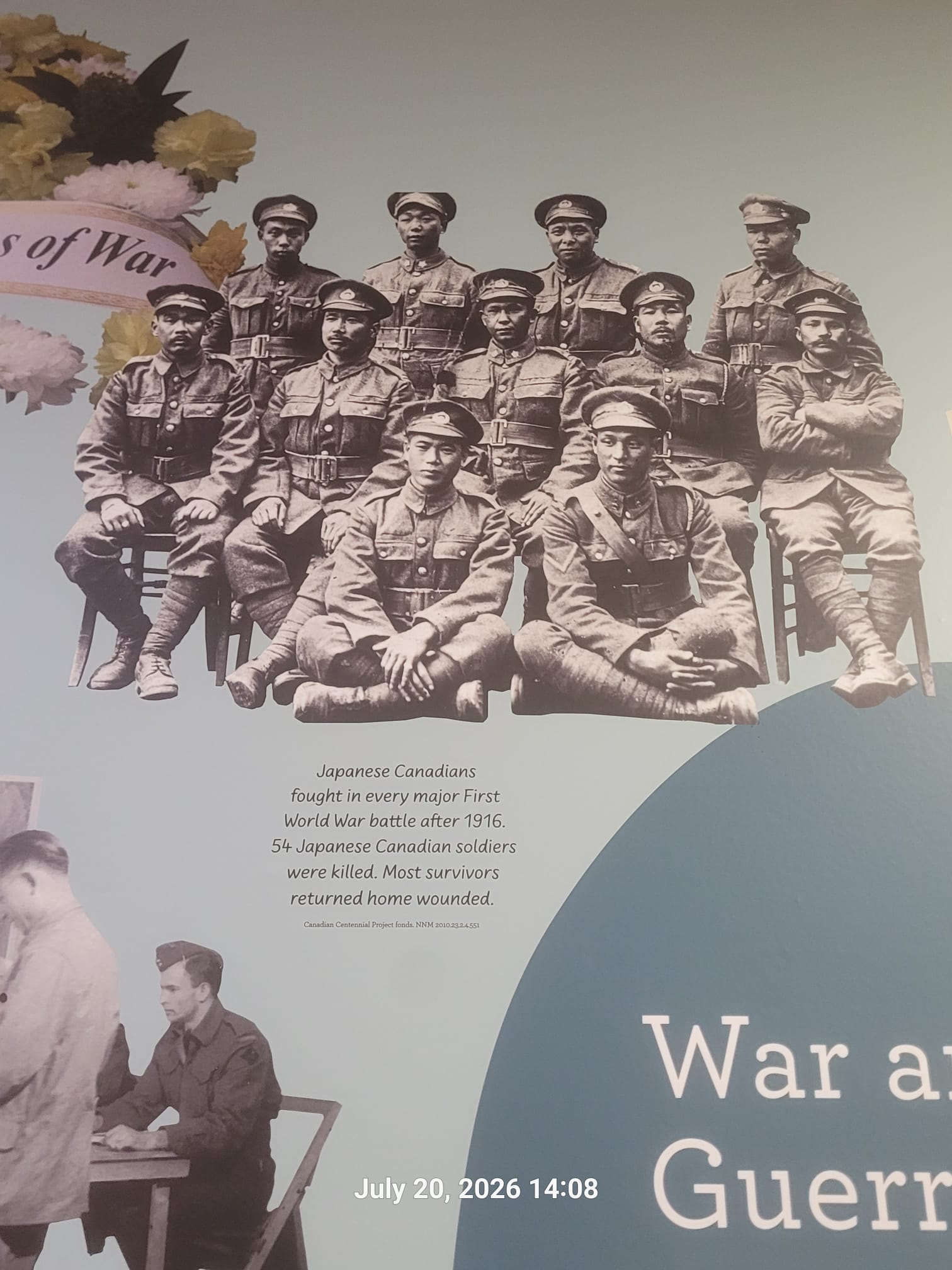
These were men of Japanese descent who volunteered to serve in the Canadian Expeditionary Force during the First World War. Many encountered prejudice and barriers to enlistment in British Columbia; more than 200 ultimately served on the Western Front after joining units in other provinces. Their willingness to serve Canada, even when they were denied equal treatment at home, is an important part of the country’s military history.
Sgt. Masumi Mitsui — Military Medal
Sergeant Masumi Mitsui, 10th Battalion, CEF
Masumi Mitsui served with the 10th Battalion, Canadian Expeditionary Force, and was awarded the Military Medal for his leadership at Vimy Ridge and again at Hill 70 in 1917. He went on to become the founding president of Royal Canadian Legion Branch 9, the Japanese-Canadian veterans' branch established in Vancouver in 1925–26. Branch 9 successfully lobbied the BC legislature in 1931 to extend the provincial vote to Japanese-Canadian WWI veterans — a narrow, hard-won victory that made them among the first Asian Canadians to win the franchise in British Columbia.
Despite his decorated service, Mitsui was stripped of his property and interned along with his family and community after the 1942 War Measures Act order. Japanese-Canadian soldiers of the First World War were awarded thirteen Military Medals and two Cross of St. George medals in total.
Read the full story: Branch 9 — The Japanese Canadian Legion
Indigenous Soldiers Decorated at Hill 70
Private Joseph "Lumberjack" Roussin, 22nd (French Canadian) Battalion
A Mohawk from Kanesatake, Quebec, Roussin enlisted in 1915 and served as a reconnaissance scout with the 22nd Battalion — the "Van Doos." On August 15, 1917, the opening day of the battle, he carried out a single-handed attack on eight enemy soldiers near Lens, killing five and taking three prisoners. He earned the Military Medal for the action. Battalion records describe him as one of the most wounded men in the regiment by war's end.
The 107th (Timber Wolf) Battalion
Raised in Winnipeg in 1915 by Lt.-Col. Glen Campbell, the 107th Battalion was roughly half Indigenous. At Hill 70 the battalion, by then a pioneer unit, followed the assault troops across no man's land to dig communications trenches in newly captured ground — under fire and exposed to poison gas. Individual gallantry awards to its members at Hill 70 are not fully documented in published sources; this page will be updated if further records come to light.
Black Canadian Officer Killed at Hill 70
Lieutenant Lancelot Joseph Bertrand
Born in Grenada, Bertrand was one of the first Black volunteers in the Canadian Expeditionary Force, enlisting in September 1914. He rose through the ranks to lieutenant, becoming one of only seven Black officers in the CEF, and earned the Military Cross for bravery at Vimy Ridge. He was killed in action on August 15, 1917, the opening day of the Battle of Hill 70.
Summary Table
| Name | Background | Unit | Decoration |
|---|---|---|---|
| Sgt. Masumi Mitsui | Japanese Canadian | 10th Battalion, CEF | Military Medal |
| Pte. Joseph Roussin | Mohawk, Kanesatake | 22nd (French Canadian) Battalion | Military Medal |
| Lt. Lancelot J. Bertrand | Black Canadian (b. Grenada) | CEF (killed at Hill 70, Aug 15, 1917) | Military Cross (Vimy Ridge, 1917) |
| 107th Battalion | ~50% Indigenous | Pioneer Battalion | Unit honour, no individual award confirmed |
Sources
- Legion Magazine — "The VC heroes of Hill 70"
- Legion Magazine — "Indigenous War Heroes" (Roussin, the 107th Battalion, and Indigenous service more broadly)
- Canadian History Ehx — "The Battle of Hill 70" (Lt. Lancelot Bertrand)
- Vimy Foundation — "Sgt Masumi Mitsui MM: A Lifetime of Service"
- Parks Canada — "Japanese Canadian Soldiers of the First World War and the Fight to Win the Vote" (service, discrimination, and the 1931 franchise)
- Government of Canada — "Significant events in the history of Asian communities in Canada" (history of voting rights)
- Wikipedia — "Masumi Mitsui"
- Wikipedia — "Battle of Hill 70"
- Veterans Affairs Canada — "The Battle of Hill 70"
This page draws its Hill 70 material from published sources listed above. The Mitsui / Branch 9 material links to a companion page that clearly separates independently verified history from an unconfirmed 2026 reinstatement report — see that page for full sourcing notes. Records of individual gallantry awards for Indigenous, Black, and other Non-White soldiers from this period are incomplete in the historical record; this page will be updated as further documentation becomes available. Corrections and documentation are welcome.